
You may be interested in Living on the Inner Edge, A Practical Esoteric Tale
Learn about the deeper esoteric experiences that leads to the Path of Initiation.
This is written for those who dare to go beyond the confines of this life. What you’ll find in this book that you won’t find in other esoteric books. “Living on the Inner Edge” is now published and available in paperback, e-book, and kindle.
Insights into the teachings of NSEW
At NSEW the course of study is a synthesis of the heart of various teachings blended into new form focused on awakening the inner essence, the true Spiritual Man, that is the real aspirant.
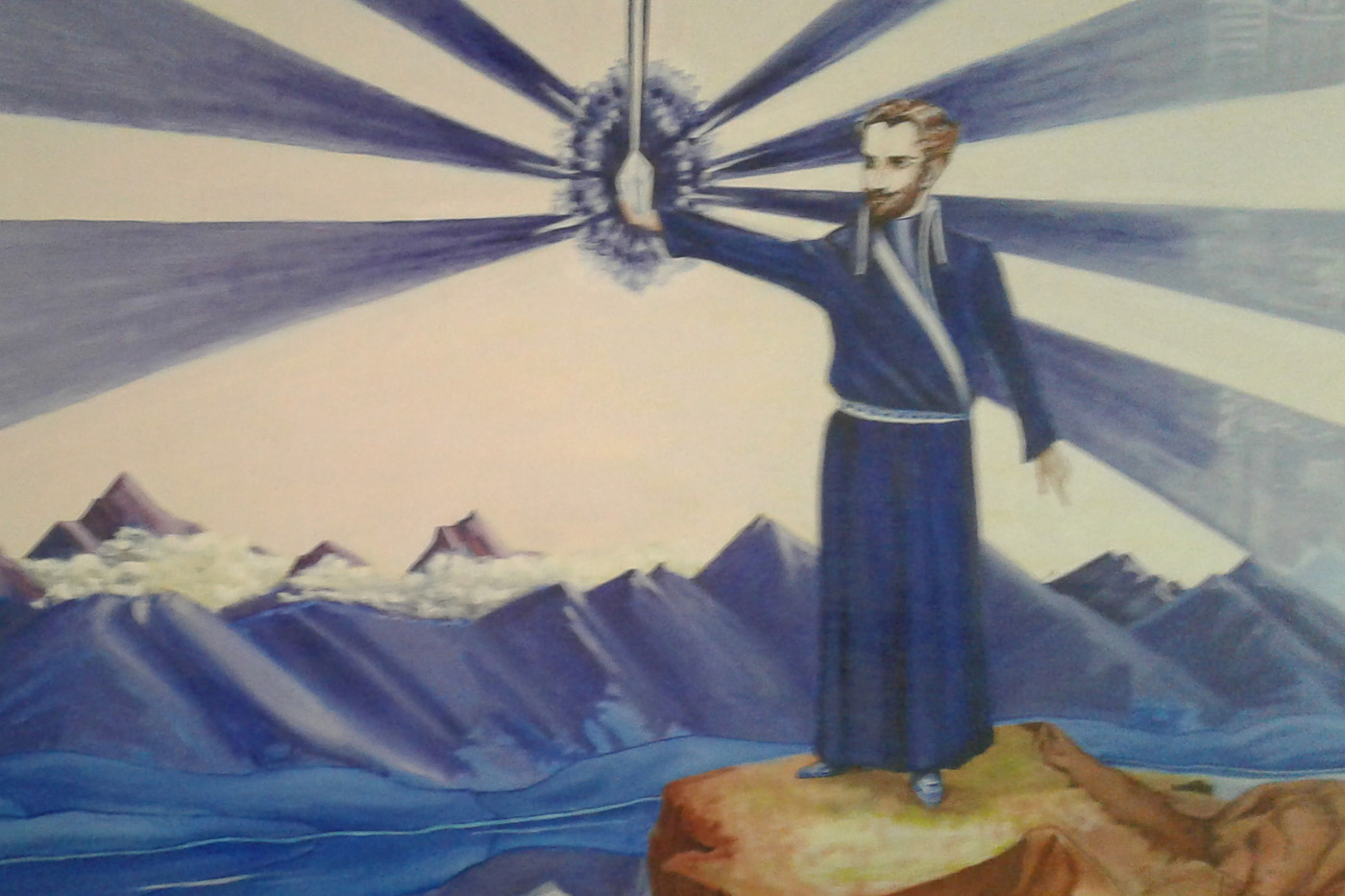
The foundation teaching is Theosophy as given out primarily through the books by AAB. At the core of Theosophy is ‘Atma-vidya’, and from this keynote teaching, add ‘Atma-Vicara’, all leading to Self-inquiry and the awakening our Essential Self, helping us to separate from the bondage of the personality thought-form. Both these teachings are strongly reflected throughout the teachings of the Master DK. In fact, they act as keys that unlock hidden doors of knowledge to go deeper into the teachings that he gives out.
The Esoteric Path is based on discipline, practice, service, and knowledge. Knowledge acts as the foundation for esoteric practice. Without practice, discipline and service, study generally leads to an occult pride. As one makes progress on the esoteric path and comes under the influence of 2nd force, the forces of opposition, the hindrances on the path, knowledge can truly help one navigate through the labyrinth of difficulties created by astral glamours and illusions.
Let’s take a look at the foundation of study that gives the student a practical approach to one’s inner practice.
Samkhya Yoga: 5 Koshas, Purusha and Prakriti, tatvas
Yoga Sutras: 5 Vrittis, 5 corresponding states of the Chitta, 3 gunas, 4 inner Yogas, Samskara, ahamkara, yoga psychology
Fourth Way: 5 Centers, multiplicity of I’s, man is asleep, man cannot do, law of octaves
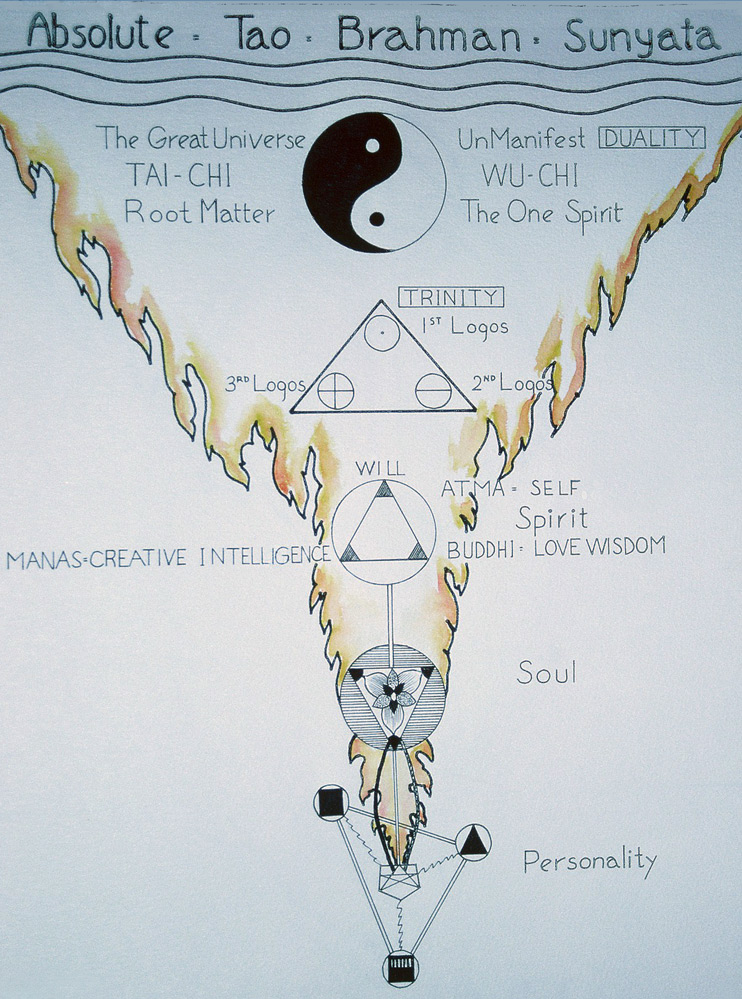
Atma-Vidya: Occult constitution of Man, Spirit, Soul, and Personality
Theosophy: Teaching of Master DK, Group Work / Service to Humanity, 7 Rays / Esoteric Psychology
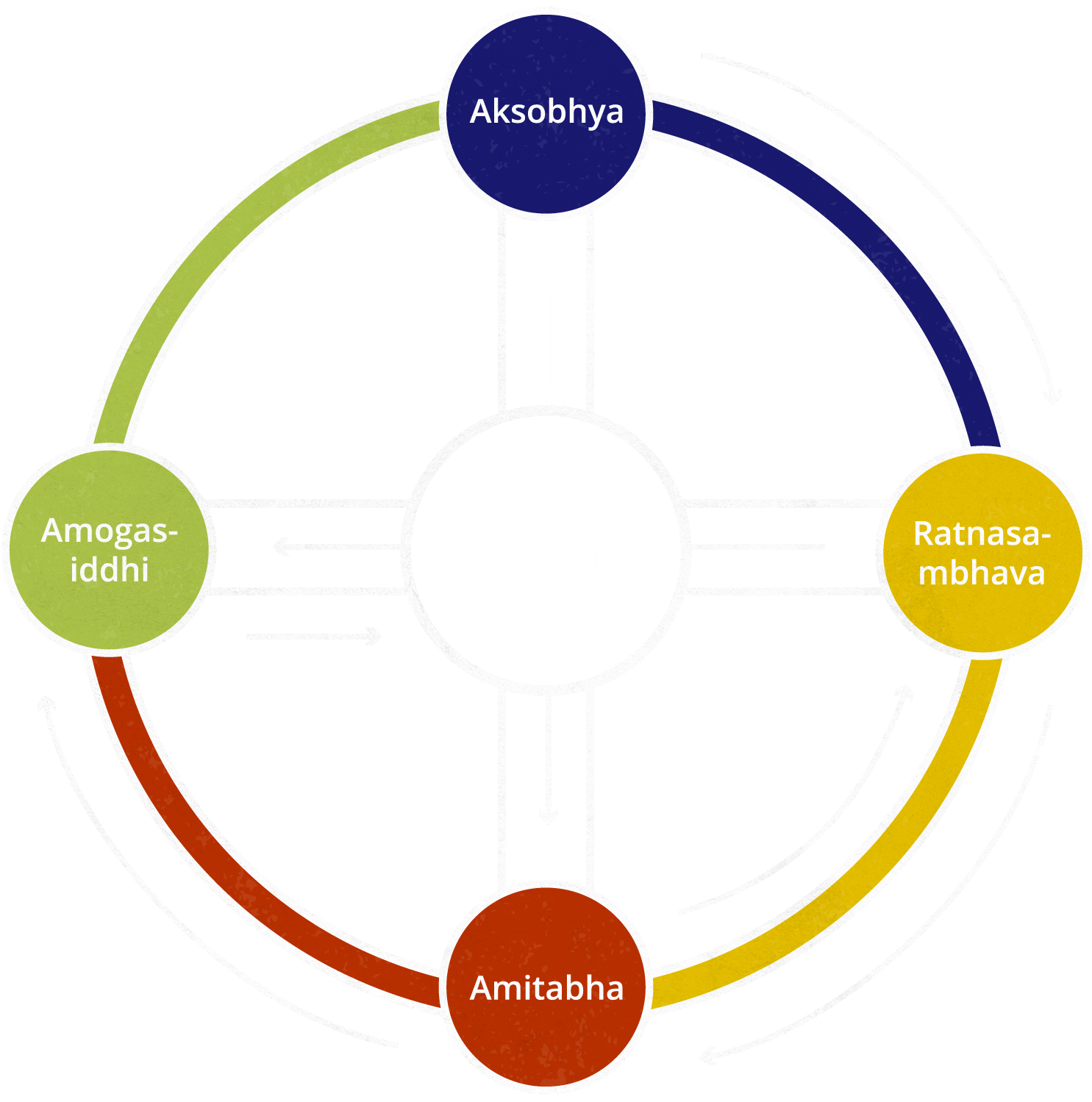
8 Vijnanas: 5 Skandas, 5 Dhyani Buddhas
Path of 6 Paramitas: Heart Sutra
A Brief Outline of each of these Paths:
The teaching of Samkhya Yoga, considered the oldest Yoga philosophy, is reflected in the teachings of DK/Theosophy in the outline of the different bodies of man, physical, etheric, astral, mental, and Buddhic. The teaching on the tatvas is the source of the teaching on the different planes. For instance, the physical body in Samkhya philosophy is called the, ‘Anamaya kosha’, meaning the body that lives from food. The etheric body is called the ‘prana maya kosha’, the body that lives from the vitality or prana. Kama-manas, the lower mind, is the ‘manomaya kosha. The Soul and Causal body is the ‘vijnanamaya kosha’, showing this body of consciousness to be an individualized consciousness. The Buddhic body, in Samkhya is called the ‘anandamaya kosha’, the body of ‘bliss’ the body of the enlightened Arhat.
The Yoga Sutras explains the rules for mind control, and the nature of psychic powers and development of the psychic consciousness, the Master DK teaches (Pg 203 Light of the Soul). Understanding the motion of the mind and the different forces (3 gunas) acting on the mind helps the disciple in the discipline of self-observation and eventually learning how to deal with these forces, understanding how to make conscious changes in one’s psychology. The 4 inner Yogas teach the true science of meditation, the stages, what happens in each stage, and what results to expect. As a science of Yoga, these Yoga Sutras helps the disciple to overcome the many glamours in their meditation.
The Fourth Way is a no-nonsense methodology of examining how human psychology really works. It goes so much deeper and is more precise, being a 5th ray methodology, than modern psychology. The 5 centers and psychological action of these 5 centers in their combined totality creates the personality thoughtform. The concept of the multiplicity of I’s within us is reflected in the Yoga Sutras through the teaching of the effect of ahamkara on our samskaras (latent memories) becoming active vsanas(present identified actions). This type of analysis when correctly done really helps to discriminate between the forces of the personality and Soul/Essence within us.
The Buddhist teaching on the 8 Vijnanas is very abstract, and is based on levels of consciousness. It becomes esoteric when blended with the 5 Skandas. This is not given out in books. My teacher, RN was inspired and entered into this realization through the study of the 5 Dhyani Buddhas. In the teachings of the Master DK does not mention these Buddhas, a northern Buddhist teaching, directly, but many times he will write a description that directly points to these Buddhas. An example, Letters on Occult Meditation, pg. 283, “there shall be no more sea” will be known, and the sea of storm and passion will be superseded by the sea of glass, which directly reflects the higher intuition, and mirrors it with perfect accuracy, being unruffled and immovable. This is directly pointing to Akshobhya Buddha, (maha-darsa jnana siddhi), whose characteristics are unshakeable, unmovable like a mountain, with mirror-like wisdom the reflects perfectly the true reality. Our minds (Chitta) have to become like Akshobhya Buddha.
The Path of the 6 Paramitas as given out in the Voice of the Silence, the Seven Portals (note: HPB adds a 7th Paramita) is a direct teaching that outlines the different levels/stages of the Path. It is the steep esoteric path, the Heart doctrine, hard to climb, meant only for those few who are willing to risk everything to enter upon this Path. The Heart Sutra, whose essence is pointed to in the Voice of the Silence, The Seven Portals, shows the relationship between ‘form’ and ‘formless (void)’, “though has to study the voidness of the seemly full, the fullness of the seeming void” that has to become a profound understanding deep in the advanced meditator.
The teachings given out by the Master DK via the books of AAB is a monumental work that not only helps so many aspirants of the Ageless Wisdom, but also impacts and uplifts the Soul of Humanity. DK clearly points out that he can give out only real hints and must leave out much of the details of direct teachings, “much that I will say will be somewhat ‘blind’ or veiled in symbol; much that I could say will not be said. Those that have eyes to see and ears to hear will read between the lines and correctly interpret my symbols, hints and references.” (Rays and initiations, pg. 328. Thus, it’s up to the aspirant to make the effort to search out further teachings that corroborate, and leads to deeper understanding of the teachings of DK. These auxiliary teachings help you read between the lines when reading the books of AAB, and discover some of the hidden esoteric secrets the Master DK alludes to.
These are in themselves interesting questions.
Remember our answers are based on the Esoteric Tradition and not on modern psychology. A personality is a thought-form that has been created over many lives; it actually has a form and exists in the 6th Vijnana, sixth state of consciousness, in the Buddhist system of the 8 Vijnanas. It is not visible to us as we only see its projections, the personality characteristics that we are so familiar with. This thought-form is created by the vortex of ‘vritti’, which in the Yoga Sutras is translated as “the modifications of the mind stuff”, which is always in motion made up of all thoughts and emotions, coordinated through a physical body. Also, the personality is a projection in time; each incarnation makes up part of our time body.
The personality evolves from life to life.
It is through the struggles of life, experiencing the joys and the pains that befall us in each life building diverse skills and abilities through the challenges of living that the personality evolves. Daily living, whether in the cities or farms, in the plains or the hilltops, acts as the great catalyst to the evolving personality. Since the personality is evolving, not everyone has a coordinated personality. For the vast majority of people, their sense of self is in the physical body. From the construction worker, farmer, miner, laborer, and athlete just to name a few.
The next group comprises of individuals whose sense of self is in their emotional body, such as artists, musicians, poets, day-care workers and actors. The third group comprises of those focused in their intellects, the scientist, engineer, professor, lawyer, accountant and doctors. This is not a rigid categorization as there are overlaps. This outline presents an alternative way of viewing the totality of humanity on this planet.
Eventually, there occurs one life where the allurements of society no longer pulls or distract the personality, and then the personality may experience that inner call of the Soul, the Essential Nature, stirring the personality into new activity. Then when your soul life is beginning to stir the search begins for the Path. This is an extremely important point. As the new seeker begins to search, unconscious past tendencies awaken, creating interests where, what appears to be new, is in fact a recurrence of interest from a distant past. Finding that you are attracted to the teachings of Lamas of Tibet, as an example, shows that an unconscious memory (samskara) is actively drawing you to resume past efforts. This is the first step, resuming where you left off. The challenge is to grow beyond this comfort level that exists because of the familiarity of past effort. This depends on one’s spiritual karma and inner aspiration. When you’ve reached the top of a 1000 foot pole you have to be prepared to jump!